
Since the Champions League's rebranding in 1992, continental success has become the defining benchmark for club ambition. For most participants, seasons pass — sometimes decades — without a title. These periods constitute what this study calls a trophy drought: a formally defined spell between UCL wins, or from 1992 if no win had yet occurred.
The structure maps directly onto a survival analysis problem: a clear event of interest, a defined time axis, and incomplete follow-up handled through right-censoring. The dataset covers all UCL finalists from 1992–93 through 2024–25.
“Given a set of institutional and sporting covariates, how long does it take for a club to end its UCL drought?”
Research Question
Data Parameters.
The dataset spans 56 distinct drought spells across 23 unique clubs. A key distinction in this analysis is the use of UEFA League Rank as a proxy for the competitive environment, rather than the club's individual coefficient.
Censoring applies to 23 spells where the drought remains unresolved as of the 2024-25 season. All censored observations are treated as non-informative, following standard survival analysis conventions.
| Variable | Type | Role | Description |
|---|---|---|---|
| Duration Years | Numeric | Time Variable | Years elapsed in drought spell |
| UCL Won | Binary | Event (1/0) | 1 = UCL title won; 0 = right-censored |
| Starting Year | Numeric | Temporal | Season in which the drought commenced |
| Ending Year | Numeric | Temporal | Season in which the drought ended |
| Managers Used | Count | Covariate | Permanent managers during the spell |
| Total Net Spend (ME) | Continuous | Covariate | Estimated net transfer expenditure |
| Average Squad Age | Continuous | Covariate | Mean squad age across period |
| Previous UCL Titles | Count | Covariate | Titles won before spell started |
| Finals Lost | Count | Covariate | UCL finals lost during specific spell |
| UEFA League Rank | Continuous | Covariate | Average UEFA rank of domestic league |
| Billionaire/State | Binary | Covariate | 1 = Oligarch/Sovereign wealth funded |
| Talent Departure | Binary | Covariate | 1 = World-class (top-3 global) player lost |
Non-Parametric Estimates.
The estimated median drought duration is 12 years (95% CI: 8 to 33 years), meaning half of all drought spells lasted at least 12 years before resolution.
“After year 10, the conditional probability of ending a drought decays exponentially.”
Cox Regression.
The full Cox model correctly ranks drought durations in 92.3% of all two-club comparisons.
Forest Plot — Full Cox Model (n=56, events=33) — Darker bars = p < 0.05
Refinement & Validity.
Schoenfeld Residuals.
| Variable | Chi-sq | p-value | Remediation |
|---|---|---|---|
| Billionaire/State Owned | 6.181 | 0.013 | Stratified |
| Managers Used | 9.683 | 0.002 | Excluded |
| Total Net Spend | 5.117 | 0.024 | Excluded |
AIC Optimization.
| Distribution | AIC Score |
|---|---|
| Log-NormalSELECTED | 188.25 |
| Weibull | 189.57 |
| Log-Logistic | 189.59 |
| Exponential | 214.55 |
Accelerated Failure Time.
Log-Normal AFT — AIC 188.25 (Best Fit). Time Ratio > 1 = drought extended. TR < 1 = shortened.
“Losing a world-class player (TR = 2.03) more than doubles the expected drought duration — exceeding the combined effect of all financial covariates in the model.”

A Log-Normal AFT application to the post-2015 institutional drought.
Profile Parameters
- Drought Duration11 Years (Current)
- Managers Used6 (Enrique to Flick)
- Talent Departure1 (Messi, 2021)
- Avg UEFA League Rank1 (La Liga)
Current Trajectory
Because Barcelona is coded as having experienced a Generational Talent Departure (HR=0.210), the predicted survival curve never falls below the 50% survival threshold during the observable time horizon.
Financial Simulation Scenario
The Alvarez Signing.
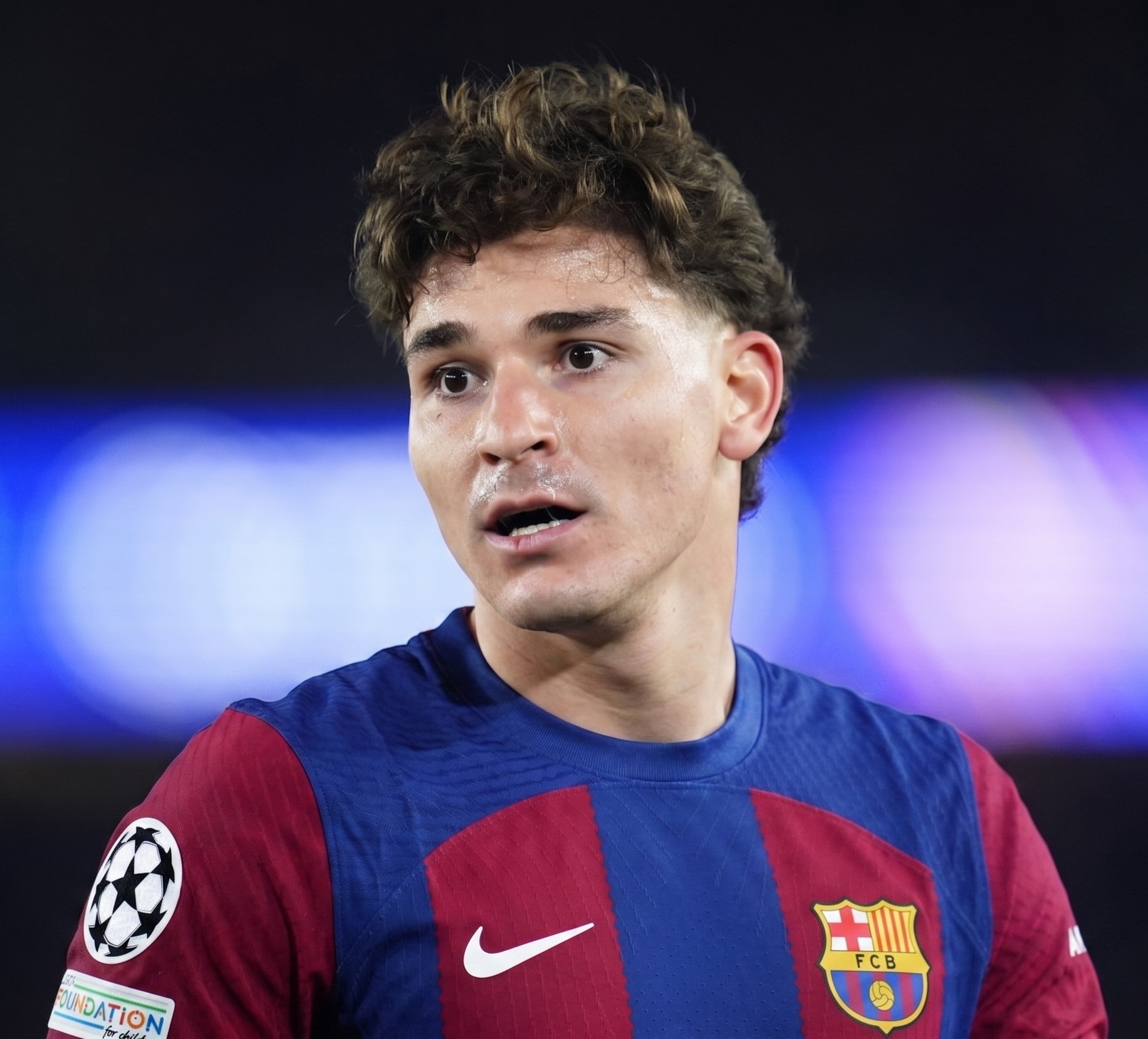
The financial simulation of signing Julian Alvarez for an additional net expenditure of EUR 100M produces only a marginal improvement. The model estimates that the median predicted drought decreases by only 0.5 years (from 9.6 to 9.1).
Finding: Spending alone cannot resolve the structural loss of Lionel Messi.
This investigation demonstrates that UCL trophy droughts are not merely products of chance, but are systematically predictable from institutional and sporting covariates.
Structural Elite Dominance
The median drought duration of 12 years (95% CI: 8–33) underscores a structural difficulty that exceeds common sporting intuition.
Managerial Project Continuity
Instability is the primary hazard; each additional manager extends the expected drought duration by 24% (TR = 1.24, p < 0.001).
The Irreplaceable Talent Gap
Losing a generational talent more than doubles the expected drought (TR = 2.03), an impact that dwarfs all financial variables combined.
League Infrastructure Advantage
Domestic quality acts as a force multiplier; clubs from top-ranked leagues resolve droughts 58% faster per annum (HR = 1.583).
The Financial Neutrality
Ownership structure and net transfer spending show no statistically significant independent effect when coaching and squad continuity are controlled.
Statistical Discriminative Power
The Log-Normal AFT model achieves an 82% concordance, successfully ranking the competitive longevity of 4 out of every 5 club pairings.
“In the ecosystem of elite competition, structural continuity remains the single most consequential variable for institutional longevity.”
References & Data Sources.
Cox, D.R. (1972). Regression models and life-tables. Journal of the Royal Statistical Society.
Kaplan, E.L. & Meier, P. (1958). Nonparametric estimation from incomplete observations. JASA.
Therneau, T.M. & Grambsch, P.M. (2000). Modeling survival data: Extending the Cox model.
R Core Team (2024). R: A language and environment for statistical computing.
Union of European Football Associations (2025). UEFA Champions League historical records.
Transfermarkt GmbH (2025). Transfer history and net spend data by club.